Young Reporters for the Environment (YRE) | FEE Academy Participant, Category: 14–15 Years Old (Grades 9–10)
Climate Challenges in the UAE: Community Pathways to Food Security
The DPS Sharjah family shows how even small actions can make a big change, by consistently following the UAE Food security goals, and starting small initiatives to support these goals.
Adel E, Fathima A, Jaivardhan M, M Daniyal, Shyam M, Saatvik S
We regularly ignore how conveniently food comes to our plate. Even the cheapest instant meal still passes through multinational trade routes, massive logistics networks, hundreds of farmers, factories and companies that culminate in a 10 trillion USD market. Every bite receives the effort of a thousand hands before it reaches your mouth. So many people are involved from farm to table that a single failure can bring the operation down.
A major factor that can affect the food industry machine is climate change. Throughout our research, we realized the essence of the line “small change, big impact” is not that every person must do something big, but that diversifying massive operations throughout the population reduces the difficulties in maintenance, expenses, and so on, and thus drives progress.
So, we thought, as the Delhi Private School Sharjah family, how can we help fix this issue? To understand further, we began to research and get more context.
Food security across the globe has become increasingly constrained by climate change, especially here in the MENA region and due to how liberally individuals are accessing food or relying upon food worldwide. Climate change has caused unpredictable weather patterns such as heat waves, flooding, etc. that have made agriculture less consistent and have yielded less food production. Simultaneously, since we are used to an abundance of food, the slightest instability can affect the world. Since we are all connected globally, any instability (food price increase or the unaffordability for basic nutrition) in one part of the world creates ripple effects throughout all countries.
After evaluating this issue and getting context, we realized that we did not lack technical knowledge, but we needed perspective. We consulted former CEO of the Emirates Literature Foundation and Director of Voices of the Future Generations Arabia, Ms. Jennifer Malton, who has worked closely with UN Goodwill Ambassador for VoFG H.H. Sheikha Hissa.
How has food insecurity due to factors such as climate change, etc. personally affected you in your lifetime?
“I was born in the 1960’s and we were lucky enough to have a farm; in those days we were very much self-sufficient. We had cows, grew all our fruit and veg, we kept chickens for eggs. I understand all this is not available to everyone, but… It was great to have the time to build a community for the town and villages around us.”
From this interview, we realized that the best way to become food secure is to not let this burden remain solely on the government. Thus, we worked closely with the school administration to implement UAE’s first in-school 2 stage sewage treatment plant, a school farm, and so on.
Our gardens powered by the 2-stage STP use wastewater from the school and nearby sources, which is filtered and reused for watering the plants, flushing and so on instead of giving the Water Authority that extra load. Our hydroponics system also grows crops using this treated water, which shows our commitment to our key ideal: taking responsibility, reducing load on the UAE’s agriculture, farming and water systems.
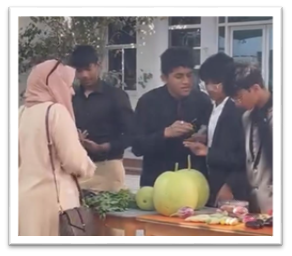
Where hydroponics doesn’t work, we use a Bokashi composting solution, that ferments the compost into nutrient-rich soil-like compost, usable for growing vegetables and fruits. Students and parents come to buy vegetables grown right on campus at our school’s vegetable stalls, and the excitement is clearThe range is amazing, from the smell of bundles of coriander and fresh garden radishes to our bottle gourds. Our highest yield monthly is 6-10 kilograms of bright cherry tomatoes, showing that we can have ample-yield food security right in our own school. This investment has allowed our students’ families to structure simple, daily needs around our school “farm.”
But what is the general set of ambitions and ideals that will allow our students to carry this on?
We gained further insights from Ms. Malton.
What thoughts and mental models did you pick up in your experience on that allow you to think in more sustainable ways? How would you apply these to finding a path out of food insecurity?
“I had the honour of working with H.H. Sheikha Hissa… the mental models that allow you to think sustainably (one of which) is obviously, be not quite so fast paced. Obviously, we are now growing vertical farms in the desert. We have solar powered farms… And, you know, I see (these ideas) through my judging and through my work with children.”
We understood that even though we shouldn’t stop advancing technically, we do need to slow our lives down and find ways to use resources in a less “modern way”. In the eras of food scarcity, every resource went through a full cycle of use, which we don’t do anymore. Doing so will vastly improve our health, lifestyle and make us less vulnerable to war, climate spikes and so on. Food security at its heart is a game of proximity.
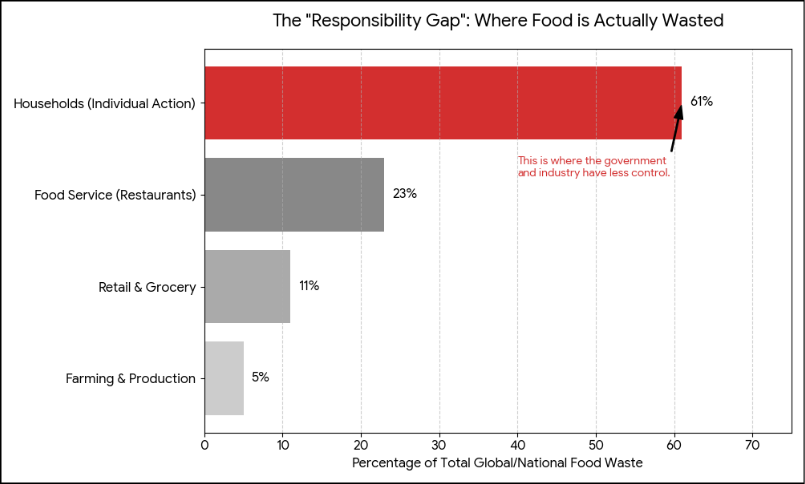
We hope we have inspired you to take your own action. But what do we recommend specifically? Here are some solutions.
Buy Bokashi composting bins, so parts of your food waste, can be used to compost into agricultural material which is scarce in the UAE. Every vegetable has the cost of millions of dirhams behind it.
Support people working on growing organic vegetables, grinding organic oils and so on. Buying these as opposed to mass produced products supports the industry trying to make us more food secure.
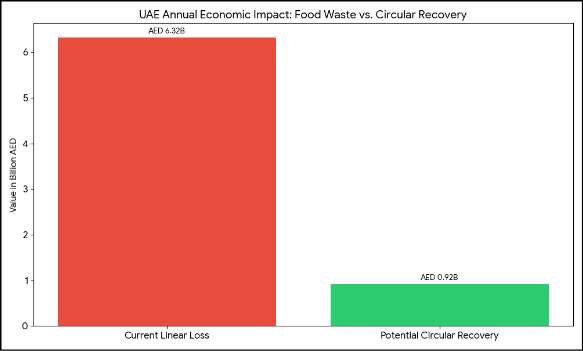
Make life less fast-paced and consumerist. Try to do every activity to use every resource to its maximum, and we will naturally meet our sustainability goals.
“Sustainability is no longer about doing less harm; it is about doing more good.” – Jochen Zeitz